trading
Backtesting Prediction Strategies Without Look-Ahead Bias
- trading
- kalshi

Backtesting Prediction Strategies Without Look-Ahead Bias

In the world of quantitative trading, developing predictive models is only half the battle; ensuring these models are rigorously validated through backtesting is equally critical. However, a common pitfall to avoid is look-ahead bias, which can lead to overestimated performance metrics and ultimately skew trade decisions. This article will illustrate what look-ahead bias is, why it's critical to eliminate it from backtesting procedures, and how to implement a robust backtesting framework using Python.
Understanding Look-Ahead Bias
What is Look-Ahead Bias?
Look-ahead bias occurs when a trading strategy uses information that would not have been available at the time the trade decision was made. This can manifest in various ways, including:
- Utilizing future prices when making predictions.
- Incorporating data that would not be available due to a lag in reporting.
- Handpicking periods for training or testing datasets that disregard historical context.
Consequences of Look-Ahead Bias
The practical consequences of failing to remove look-ahead bias from your backtesting process can be severe. Models may appear significantly profitable under backtesting scenarios, but once implemented in real-time trading, they can underperform or incur losses.
How to Avoid Look-Ahead Bias in Backtesting
To avoid look-ahead bias, we need to establish clear data workflows and adherence to temporal order in our modeling. Below are methods to ensure your backtesting is free from this pitfall.
1. Data Splitting Techniques
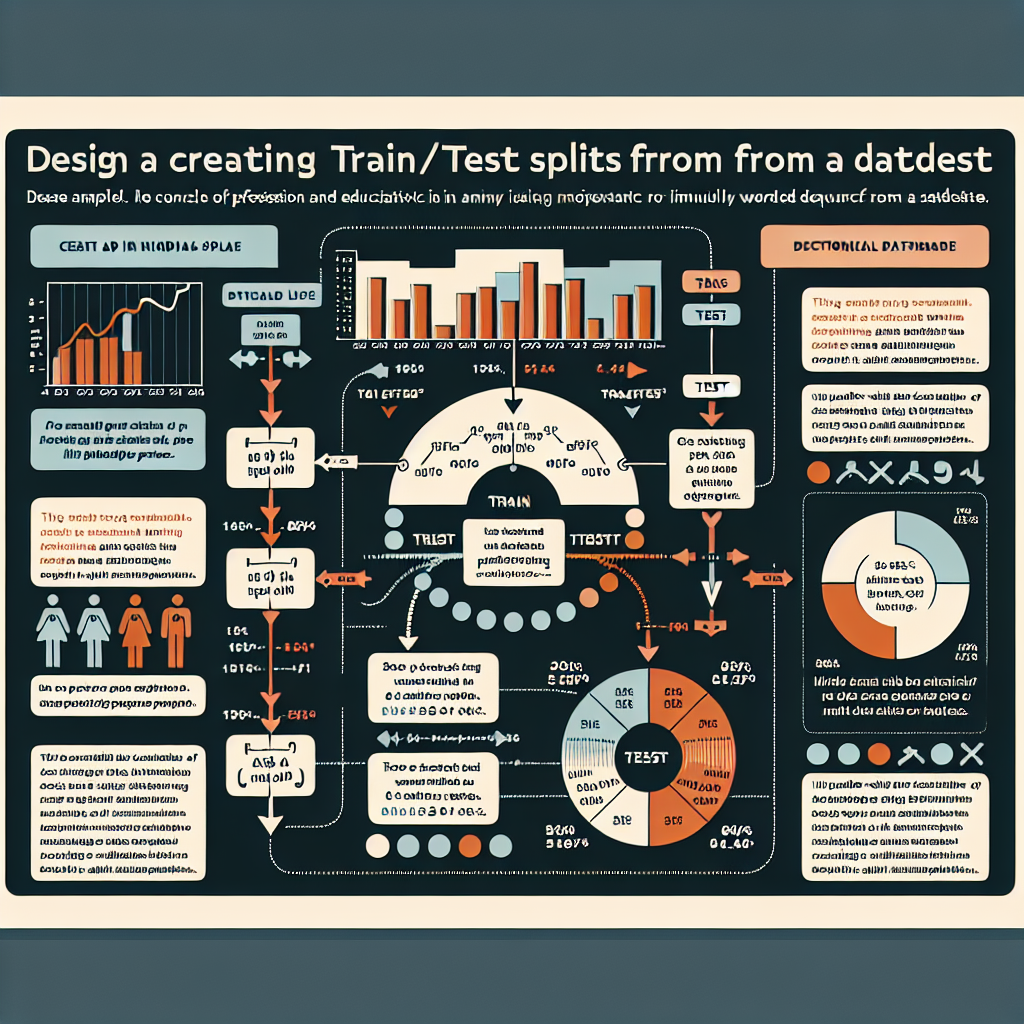
When creating your datasets, it’s essential to divide them properly. Here’s an example of how to structure your data:
Example: Creating Train/Test Splits
import pandas as pd
from sklearn.model_selection import train_test_split
# Load your dataset (for this example, `data` is a DataFrame with historical prices)
data = pd.read_csv('historical_prices.csv')
# Create time-based train/test split
train_data = data[data['date'] < '2023-01-01']
test_data = data[data['date'] >= '2023-01-01']
By ensuring that you split your data chronologically, you prevent look-ahead bias from affecting the test dataset.
2. Use Rolling Windows for Model Training
Using rolling windows can also help eliminate look-ahead bias. Instead of training your model on the entire dataset, use a methodical approach whereby the model is trained on historical data only up until the point of prediction.
Example: Rolling Window Technique
from sklearn.linear_model import LinearRegression
import numpy as np

# Function to train on rolling window
def rolling_window_model(data, window_size):
    predictions = []
    for start in range(len(data) - window_size):
        train = data[start:start + window_size]
        model = LinearRegression()
        X_train = train[['feature1', 'feature2']]
        y_train = train['target']

        model.fit(X_train, y_train)

        # Predict the next point
        X_test = data.iloc[start + window_size][['feature1', 'feature2']].values.reshape(1, -1)
        predictions.append(model.predict(X_test)[0])

    return np.array(predictions)

# Using the function
predictions = rolling_window_model(train_data, window_size=30)
In the above example, the model is trained on a subset of the past 30 days before making predictions on the next day’s price, thereby preserving the temporal order of data.
3. Trading Signal Calculation
Signals used for trading decisions should also only be derived from historical data. For instance, if you create a moving average crossover strategy, ensure that the values for calculating the moving averages do not include future data points.
Example: Moving Average Crossover
# Calculate moving averages
data['SMA_50'] = data['close'].rolling(window=50).mean()
data['SMA_200'] = data['close'].rolling(window=200).mean()

# Create signals
data['signal'] = 0  # Default signal
data['signal'][50:] = np.where(data['SMA_50'][50:] > data['SMA_200'][50:], 1, 0)  # Buy Signal
data['positions'] = data['signal'].diff()
In this example, make sure to only use data prior to each date to compute the moving averages and trading signals.
4. Checkpoint Implementation
Use checkpoints to verify that your model’s predictions do not inadvertently check future data points. Implementing checks can involve logging the model's performance on a moving basis, allowing you to monitor for anomalous scenarios caused by potential look-ahead bias.
# Periodic checkpoint function
def validate_predictions(train_data, test_data):
    # Implement model and predictions here
    # Checkpoint: Validate against the future predictions
    if not (model.predict(X_test) < data[future_col]):
        raise ValueError("Look-ahead bias detected in predictions!")
Putting It All Together: A Backtesting Framework
Here’s a minimal framework for backtesting your trading strategy that integrates the previous suggestions to ensure it's free from look-ahead bias.
Example: Backtesting Strategy Framework
class Backtest:
    def __init__(self, data, moving_average_window=50):
        self.data = data
        self.window = moving_average_window
        self.results = []

    def calculate_signals(self):
        self.data['SMA'] = self.data['close'].rolling(window=self.window).mean()
        self.data['signal'] = np.where(self.data['close'] > self.data['SMA'], 1, 0)

    def run_backtest(self):
        capital = 10000  # Starting capital
        shares = 0

        for index, row in self.data.iterrows():
            if row['signal'] == 1 and shares == 0:  # Buy signal
                shares = capital / row['close']
                capital = 0
            elif row['signal'] == 0 and shares > 0:  # Sell signal
                capital = shares * row['close']
                shares = 0

        # Store results
        self.results.append(capital + shares * row['close'])

    def get_results(self):
        return self.results


# Usage
backtest = Backtest(data)
backtest.calculate_signals()
backtest.run_backtest()
performance = backtest.get_results()
The above framework efficiently calculates trading signals and performs a backtest without violating the principles of look-ahead bias.
Conclusion
Backtesting predictive trading strategies without look-ahead bias is essential to ensure that your models are robust and reliable. By incorporating methods such as data splitting, rolling window techniques, careful signal calculation, and robust checkpoint systems, you can significantly reduce the risk of introducing bias into your models. As you develop more sophisticated trading systems, remember: avoiding look-ahead bias is not just about improving backtest performance metrics—it's about building a trustworthy model that will stand the test of live trading.