nlp
NLP Pipelines for Earnings Calls: ASR, Diarization, and Entity Recognition
- nlp
- kalshi
- trading

NLP Pipelines for Earnings Calls: ASR, Diarization, and Entity Recognition

Earnings calls are vital events in the financial calendar that offer insights into a company's performance and future direction. Leveraging Natural Language Processing (NLP) can significantly enhance the extraction of insights from these calls, particularly through Automatic Speech Recognition (ASR), diarization, and entity recognition. This article explores these components and demonstrates how to build an effective NLP pipeline tailored for earnings calls in the quant and trading space.
Understanding Earnings Calls and Their Importance
Earnings calls typically involve a company's management discussing financial results, future guidance, and answering questions from analysts. The information conveyed in these calls can impact trading decisions and market behavior. For instance, key phrases or sentiments related to performance forecasts or strategic shifts can cause sharp price adjustments in a company's stock. Therefore, extracting actionable information from these calls is invaluable.
NLP Pipeline Overview
Creating an NLP pipeline involves several key components:
- Automatic Speech Recognition (ASR): Converts spoken language into text.
- Diarization: Identifies who is speaking in a multi-speaker environment.
- Entity Recognition: Identifies and classifies key entities mentioned in the call, such as companies, products, and financial metrics.
Let's dive into each of these components to understand how they contribute to parsing earnings calls for trading insights.
Automatic Speech Recognition (ASR)
ASR is the first step in processing audio from earnings calls. It transforms raw audio into a machine-readable format. A well-functioning ASR model is essential since the quality of speech-to-text transcription directly influences the accuracy of downstream tasks.
Implementing ASR
Python libraries such as SpeechRecognition or Google Cloud Speech-to-Text can be used for ASR implementation. Here’s a basic example of using the SpeechRecognition library:
import speech_recognition as sr

def transcribe_audio(file_path):
    recognizer = sr.Recognizer()
    audio_file = sr.AudioFile(file_path)

    with audio_file as source:
        audio_data = recognizer.record(source)

    try:
        text = recognizer.recognize_google(audio_data)
        return text
    except sr.UnknownValueError:
        return "Could not understand audio"
    except sr.RequestError as e:
        return f"Could not request results; {e}"

# Example usage
transcribed_text = transcribe_audio("earnings_call.wav")
print(transcribed_text)
This script will convert an earnings call audio file into text. Be sure to have clear audio for optimal results.
Speaker Diarization
After transcription, diarization comes into play. This process identifies who is speaking at any given time during the call. In earnings calls, it’s critical to distinguish between the management team and analysts asking questions to understand the context better.
Implementing Diarization
A commonly used library for diarization is pyAudioAnalysis. However, for better performance in conversational analysis, pyDiarization or Google Cloud’s diarization features can be explored. Here’s a simplistic example using the Kaldi toolkit, which is often employed for its robust diarization capabilities.
Using Kaldi may require a more complex setup, but here’s a high-level overview of how you might implement it after preparing your audio:
# Kaldi example
# 1. Prepare your audio data in the correct format for Kaldi
# 2. Run the Kaldi diarization recipe to segment speakers

diarization.sh your_audio_file.wav
This command will produce a segmentation file indicating when each speaker is active throughout the call.
Entity Recognition
The final component is entity recognition, where the focus shifts to extracting and classifying essential terms and companies mentioned during the call. This can provide insights into competitor mentions, product launches, or critical financial metrics.
Implementing Entity Recognition
For entity recognition, the spaCy library is a powerful choice. Here’s how you can use it for extracting entities from the transcribed earnings call text:
import spacy

# Load spaCy model
nlp = spacy.load("en_core_web_sm")

def extract_entities(transcribed_text):
    doc = nlp(transcribed_text)
    entities = [(ent.text, ent.label_) for ent in doc.ents]
    return entities

# Example usage
entities = extract_entities(transcribed_text)
print(entities)
This code returns a list of entities found in your transcribed text, along with their labels (e.g., ORG for organizations, GPE for geopolitical entities).
Developing a Full NLP Pipeline
Now that we understand each component, let's integrate these elements into a full NLP pipeline for earnings calls.
def process_earnings_call(file_path):
    # Step 1: Transcribe Audio
    transcribed_text = transcribe_audio(file_path)

    # Step 2: Diarization (Simulated; you'd run the diarization in practice)
    # diarization_segments = run_diarization(file_path)

    # Step 3: Extract Entities
    entities = extract_entities(transcribed_text)

    return {
        "transcribed_text": transcribed_text,
        "entities": entities,
        # Include diarization results if implemented
    }

# Example of running the pipeline
earnings_call_data = process_earnings_call("earnings_call.wav")
print(earnings_call_data)
Example Applications in Trading
The insights derived from this pipeline can shape trading strategies. For instance:
- Sentiment Analysis: Combine ASR and entity recognition outputs with a sentiment analysis model to gauge management's tone toward future guidance.
- Competitor Analysis: Monitor mentions of competitors to assess market position dynamics based on dialogue trends during earnings calls.
- Event-Driven Trading: Use real-time processing of earnings calls to grasp significant changes in sentiments, using them to trigger automated trading strategies.
Scalability Considerations
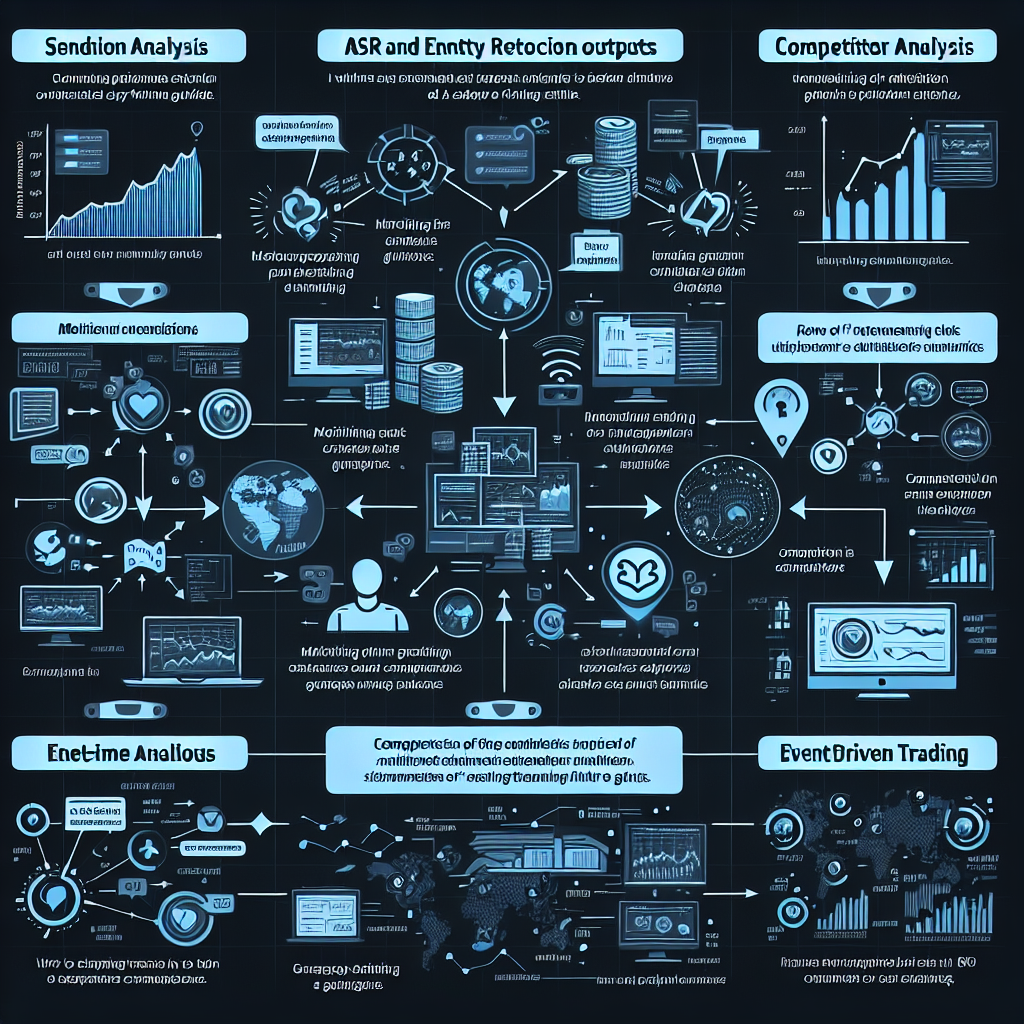
To scale this pipeline effectively, consider the following:
- Batch Processing: Instead of processing a single earnings call at a time, group multiple calls together to minimize API calls and overhead.
- Cloud Services: Leverage cloud services like AWS or Google Cloud for ASR and entity recognition, which can handle larger volumes of data with improved efficiency.
- Monitoring and Update: Regularly refine your ASR and entity recognition models based on performance feedback and changing language patterns.
Conclusion
An effective NLP pipeline consisting of ASR, diarization, and entity recognition can provide traders with invaluable insights from earnings calls. By harnessing Python's rich ecosystem and libraries like SpeechRecognition, spaCy, and tools like Kaldi, you can create a robust system capable of processing and extracting meaningful data from vast amounts of audio content. This approach enhances decision-making and keeps trading strategies aligned with market developments. Consider building this pipeline for a competitive edge in your trading endeavors.