trading
Order Book Imbalance and Edge in Kalshi Markets
- trading
- kalshi

Order Book Imbalance and Edge in Kalshi Markets

In the fast-paced world of quantitative trading, understanding market microstructure can provide a significant edge. Order book imbalance is a key metric that traders can leverage to make informed decisions, particularly in the unique environment of Kalshi markets. This article delves into the concept of order book imbalance, its implications on trading strategies, and how Python can be employed to analyze this data effectively.
Understanding Order Book Imbalance
Order book imbalance refers to a disparity between buy and sell orders within a given market. It highlights the supply-demand dynamics and can indicate potential price movements. In essence, a large number of buy orders compared to sell orders signals bullish sentiment, while the reverse indicates bearish sentiment.
Why Order Book Imbalance Matters
- Market Sentiment: It provides real-time insight into how traders perceive upcoming events.
- Liquidity Insights: By analyzing the order book, traders can gauge market liquidity and the potential impact of their trades.
- Predictive Power: Imbalances can precede significant price changes, giving traders an edge to position themselves strategically.
Analyzing Order Book Data
Kalshi is a unique market focused on event contracts, allowing traders to bet on the outcome of specific events. The order book dynamics in Kalshi markets can often behave differently than traditional equity or futures markets due to their event-driven nature.
Accessing the Order Book
Kalshi provides a rich API for accessing order book data. Here’s a general way to retrieve this data using Python.
import requests

def get_order_book(contract_id):
    url = f"https://api.kalshi.com/v1/orders/{contract_id}/book"
    response = requests.get(url)
    return response.json()

contract_id = "your_contract_id_here"
order_book_data = get_order_book(contract_id)
Calculating Order Book Imbalance
To identify the imbalance, we quantify the buy and sell orders within the order book. This helps in computing the imbalance ratio, which can further inform our trading decisions.
def calculate_imbalance(order_book):
    buy_orders = sum(order['size'] for order in order_book['bids'])
    sell_orders = sum(order['size'] for order in order_book['asks'])

    if buy_orders + sell_orders == 0:
        return None

    imbalance_ratio = (buy_orders - sell_orders) / (buy_orders + sell_orders)
    return imbalance_ratio
This simple function takes the order book data and computes the imbalance ratio, providing a numerical representation of market sentiment.
Practical Example: Trading Strategies with Imbalance
Let’s illustrate how order book imbalance can be harnessed in a trading strategy:
Scenario
Imagine an event contract on Kalshi regarding the outcome of an election. As the election date approaches, you might observe an imbalance favoring buy orders (bids). This can indicate that traders are expecting a certain candidate to win.
Implementing a Strategy
- Data Gathering: Continuously gather order book data leading up to the event.
order_book = get_order_book(contract_id)
imbalance = calculate_imbalance(order_book)
- Trading Signal Generation: Establish thresholds for imbalance. For instance, if the imbalance ratio exceeds 0.6, it might signify a strong bullish sentiment.
if imbalance > 0.6:
    print("Strong buy signal")
elif imbalance < -0.6:
    print("Strong sell signal")
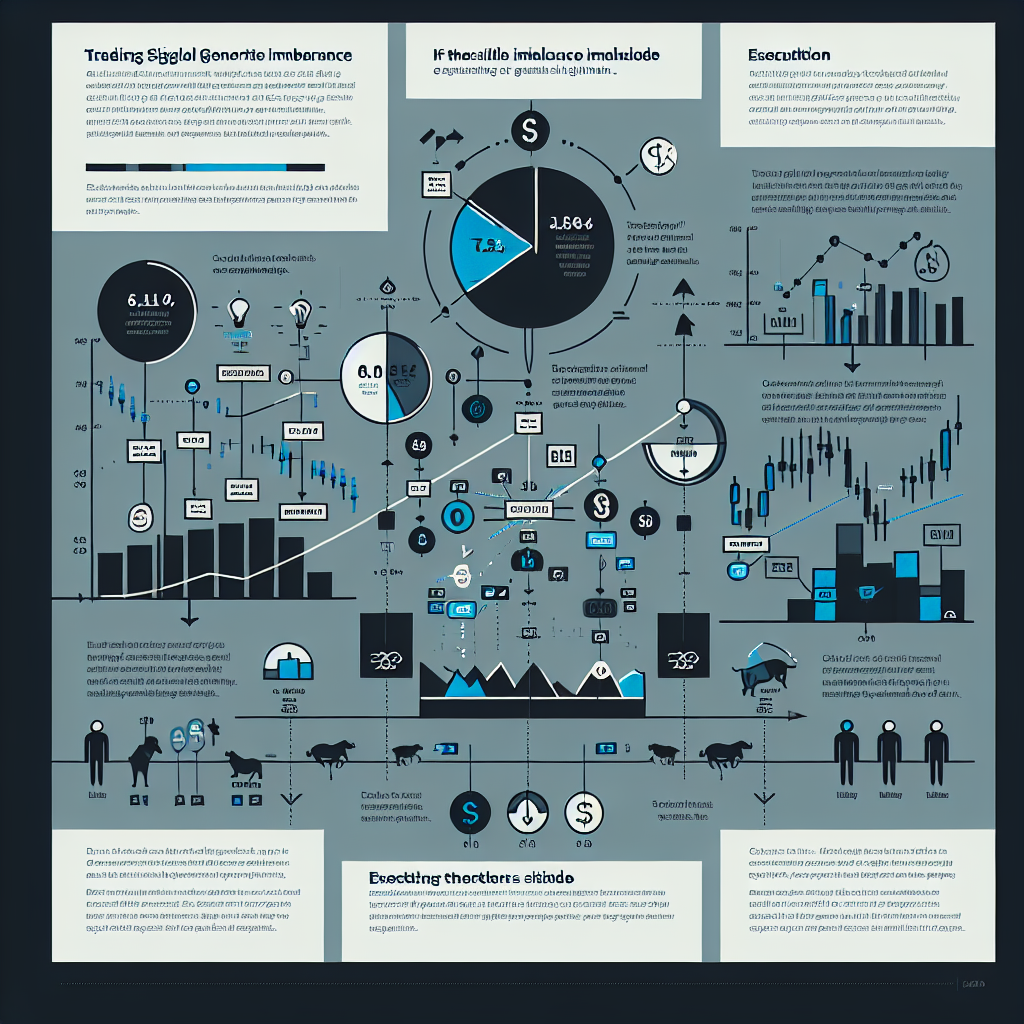
- Execution: Based on the generated signal, execute trades accordingly.
Advanced Modeling Techniques
As trading decisions based purely on imbalance can result in noise and false positives, incorporating additional market factors can refine the approach.
Machine Learning Approaches
Bootstrap models or reinforcement learning can be used to optimize trading signals based on past data. By feeding historical order book data and corresponding price movements into a model, you can derive patterns that may improve prediction accuracy.
A basic structure for a machine learning model may look like this:
from sklearn.model_selection import train_test_split
from sklearn.ensemble import RandomForestClassifier
from sklearn.metrics import accuracy_score

# Sample dataset consisting of imbalance ratios and market outcomes
data = [...]  # Load your dataset

X = data[['imbalance_ratio', 'previous_price_trend']]
y = data['trade_signal']

X_train, X_test, y_train, y_test = train_test_split(X, y, test_size=0.2)

model = RandomForestClassifier()
model.fit(X_train, y_train)
predictions = model.predict(X_test)

accuracy = accuracy_score(y_test, predictions)
print(f'Model Accuracy: {accuracy}')
Data Workflows for Continuous Improvement
Establishing a systematic workflow for processing order book data can yield consistent improvements. A recommended pipeline includes:
- Data Collection: Continuous polling of the Kalshi API for order book data.
- Data Storage: Use a database or data warehouse for long-term storage.
- Data Cleaning: Regularly clean and preprocess the data to remove anomalies.
- Analysis and Backtesting: Use historical data to backtest the strategies developed based on order book imbalance.
- Iterate: Continuously refine models and strategies based on performance feedback.
Conclusion
Order book imbalance presents a rich area for exploration and application within Kalshi's event-driven trading environment. By effectively analyzing order book data and strategizing around imbalances, traders can potentially achieve a competitive advantage. Incorporating machine learning can further enhance the robustness of trading strategies, transforming raw order book data into actionable insights. As you adapt these strategies, remember that constant iteration and testing are key to mastering the dynamics of market behavior.