trading
Tax Treatment of Prediction Market Gains and Losses
- trading
- kalshi
Tax Treatment of Prediction Market Gains and Losses

Understanding the tax implications of your trading activities is essential for any quant or trading builder, particularly when engaging in prediction markets. These markets, which allow participants to trade on the outcomes of future events, operate in a complex legal environment. This article provides a comprehensive overview of how gains and losses from prediction markets are taxed, accompanied by practical examples and considerations for modeling, trading workflows, and Python algorithms.
What Are Prediction Markets?
Prediction markets, also known as information markets or event markets, enable individuals to buy and sell shares based on their predictions of future events. Each share's price reflects the perceived probability of an event occurring. For example, if you buy a share in a prediction that a particular candidate will win an election, and that candidate wins, you profit based on the market's closing price.
Overview of Tax Treatment
Tax treatment of gains and losses from prediction markets largely falls under capital gains tax guidelines as specified by the Internal Revenue Service (IRS) in the United States. However, the situation may vary by jurisdiction. Key tax considerations for trading in prediction markets include:
-
Short-Term vs. Long-Term Capital Gains:
- Short-term capital gains apply to assets held for one year or less, taxed at ordinary income rates.
- Long-term capital gains pertain to assets held for more than one year, taxed at lower rates.
-
Ordinary Income Treatment: Some authorities view gains from prediction markets as ordinary income rather than capital gains. This label can change the effective tax rate applied to your earnings.
Trading Strategies and Their Tax Implications
To help illuminate the tax treatment landscape, consider the following trading strategies often employed in prediction markets:
Scenario 1: Short-Term Trading
Example: You frequently trade shares in a market predicting the outcome of a political election. If you buy shares at $0.60, and sell them at $0.80 within a week, you realize a gain of $0.20 per share.
Tax Implication: This is treated as a short-term capital gain, taxed at your ordinary income tax rate. If your ordinary tax rate is 24%, this gain would incur a tax of $0.048 per share, resulting in a net gain of $0.152 after tax.
Python Code Example:
# Calculate net gain after tax for short-term trading
def calculate_net_gain(price_buy, price_sell, ordinary_tax_rate):
    gain = price_sell - price_buy
    tax = gain * ordinary_tax_rate
    net_gain = gain - tax
    return net_gain

# Example usage
price_buy = 0.60
price_sell = 0.80
ordinary_tax_rate = 0.24

net_gain = calculate_net_gain(price_buy, price_sell, ordinary_tax_rate)
print(f"Net gain after tax: ${net_gain:.3f}")
Scenario 2: Long-Term Trading
Example: If you hold shares in a prediction market about a technological innovation for over a year, you might sell them for a higher price due to greater confidence in the outcome.
Tax Implication: If you realize a gain from this trade, it could be taxed as a long-term capital gain, generally at a lower tax rate. For example, if your profit is $0.50 per share and the long-term capital gains tax rate is 15%, you will incur a tax of $0.075 per share.
Python Code Example:
# Calculate net gain after tax for long-term trading
def calculate_long_term_net_gain(price_buy, price_sell, long_term_tax_rate):
    gain = price_sell - price_buy
    tax = gain * long_term_tax_rate
    net_gain = gain - tax
    return net_gain

# Example usage
price_buy = 0.60
price_sell = 1.10
long_term_tax_rate = 0.15

long_term_net_gain = calculate_long_term_net_gain(price_buy, price_sell, long_term_tax_rate)
print(f"Long-term net gain after tax: ${long_term_net_gain:.3f}")
Reporting Gains and Losses
To accurately report your prediction market gains and losses, adopt the following best practices:
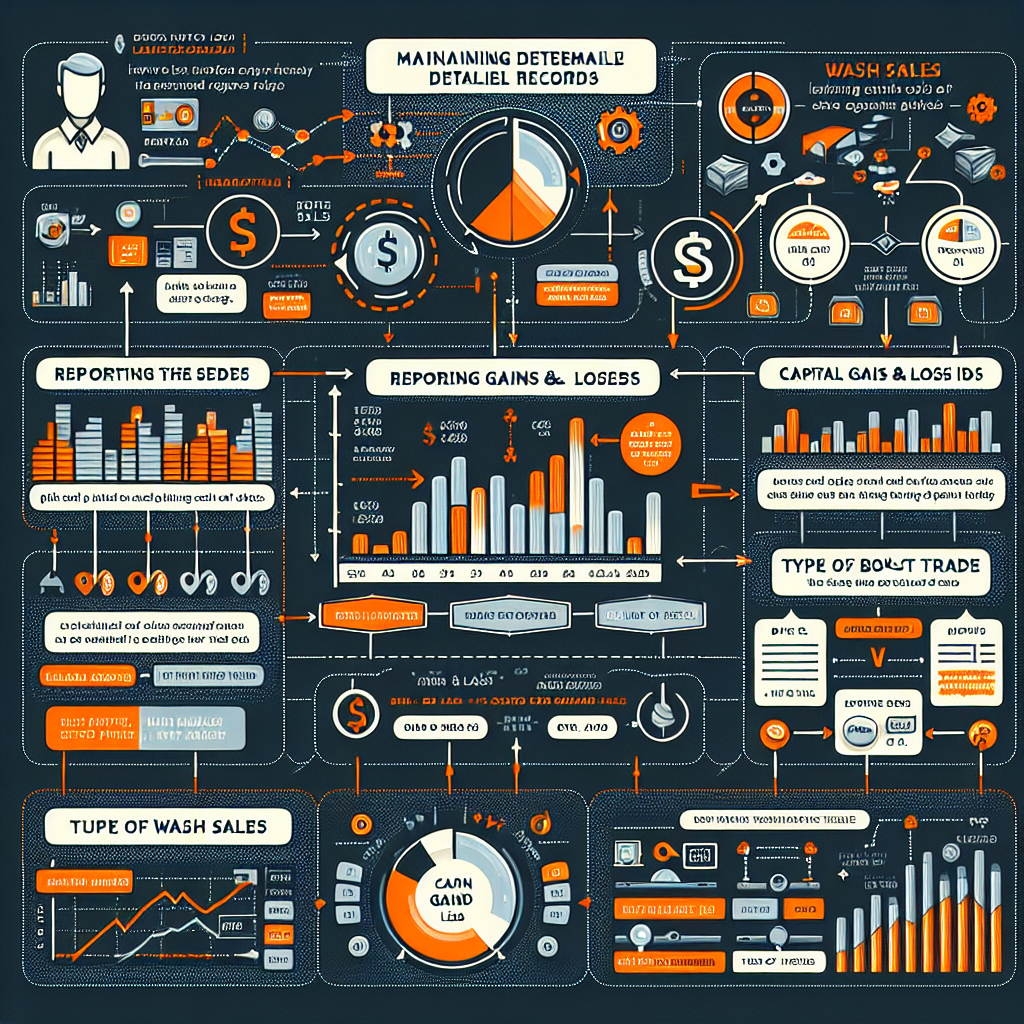
- Maintain Detailed Records: Record all transactions, including dates, prices, and types of trades.
- Utilize Software Tools: Tools like Python libraries can automate the tracking of capital gains and losses. Libraries such as
pandascan simplify data manipulation and analysis. - Understand Wash Sales: If you sell a share and then buy it back within 30 days, the wash sale rule may apply, disallowing certain tax advantages.
Example: Using Python for Tracking Gains
Here’s a simple example of how you might implement a tracking system using Python and pandas:
import pandas as pd

# Create a DataFrame for trades
data = {
    'date': ['2023-01-10', '2023-01-11', '2023-01-20'],
    'buy_price': [0.60, 0.70, 0.50],
    'sell_price': [0.80, 0.75, 0.55],
    'ordinary_tax_rate': [0.24, 0.24, 0.24]
}

trades_df = pd.DataFrame(data)

# Calculate net gains for each trade
trades_df['net_gain'] = trades_df.apply(
    lambda row: calculate_net_gain(row['buy_price'], row['sell_price'], row['ordinary_tax_rate']),
    axis=1
)

print(trades_df[['date', 'net_gain']])
Potential Considerations and Challenges
Regulatory Variability
The regulations regarding tax treatment can differ significantly between jurisdictions. It’s crucial to familiarize yourself with local laws, as some countries may classify prediction markets as gambling or other types of activities with differing tax regulations.
Future Changes to Tax Law
Tax laws are subject to change, and ongoing developments in cryptocurrency and digital assets may affect how prediction markets are taxed. It’s prudent to stay informed through periodic reviews of IRS guidelines or consult with a tax professional who specializes in trading.
Conclusion
Prediction markets can offer exciting trading opportunities, but understanding the tax implications is equally important. By being aware of how capital gains are taxed, whether short or long term, and maintaining diligent records of your trades, you can navigate this complex landscape more confidently. Additionally, utilizing Python for data management allows you to automate part of the tax reporting process, thus reducing the risk of errors and increasing efficiency in your trading workflows. Always stay updated with the latest regulations, and consult tax professionals as needed to ensure compliance.