trading
Time Decay and Event Horizon in Short-Dated Markets
- trading
- kalshi

Understanding Time Decay and Event Horizon in Short-Dated Markets

Short-dated markets offer unique trading opportunities, driven largely by specific attributes such as time decay and event horizon effects. For traders, especially quants, appreciating how time decay manifests in options pricing and the concept of an event horizon can lead to better decision-making and strategy formulation.
What is Time Decay?
Time decay refers to the reduction in the value of an option as its expiration date approaches. In the realm of options trading, time decay is formally quantified by Theta, which is one of the "Greeks" used in options pricing. As expiration nears, the extrinsic value of an option erodes, affecting trading strategies.
The Role of Theta
Theta measures how much the price of an option will decrease for a one-day decrease in time to expiration. For example, if you hold a call option with a Theta of -0.05, the option's premium is expected to decrease by $0.05 each day, assuming other factors remain constant. This erosion can be vital for short-dated markets where traders might focus on rapid price movements.
Example:
Consider a call option for a stock trading at $100, with a strike price of $105, having 10 days until expiration. If the option's premium is $2.50 and Theta is -0.20, you can expect the premium to decrease by approximately $2 within the next 10 days if the stock price remains unchanged.
Importance in Trading Strategies
For short-term traders or weekly option strategies, understanding time decay is crucial. For instance, traders often employ "selling premium" strategies, where they capitalize on the decay. By selling options with a high Theta, they can profit as the options lose value over time.
What is Event Horizon?
The concept of an event horizon, borrowed from physics, relates to a point in time beyond which events cannot affect an observer. In the context of financial markets, particularly short-dated options, it pertains to critical deadlines such as earnings announcements, macroeconomic reports, or specific corporate events.
The Impact on Pricing Models
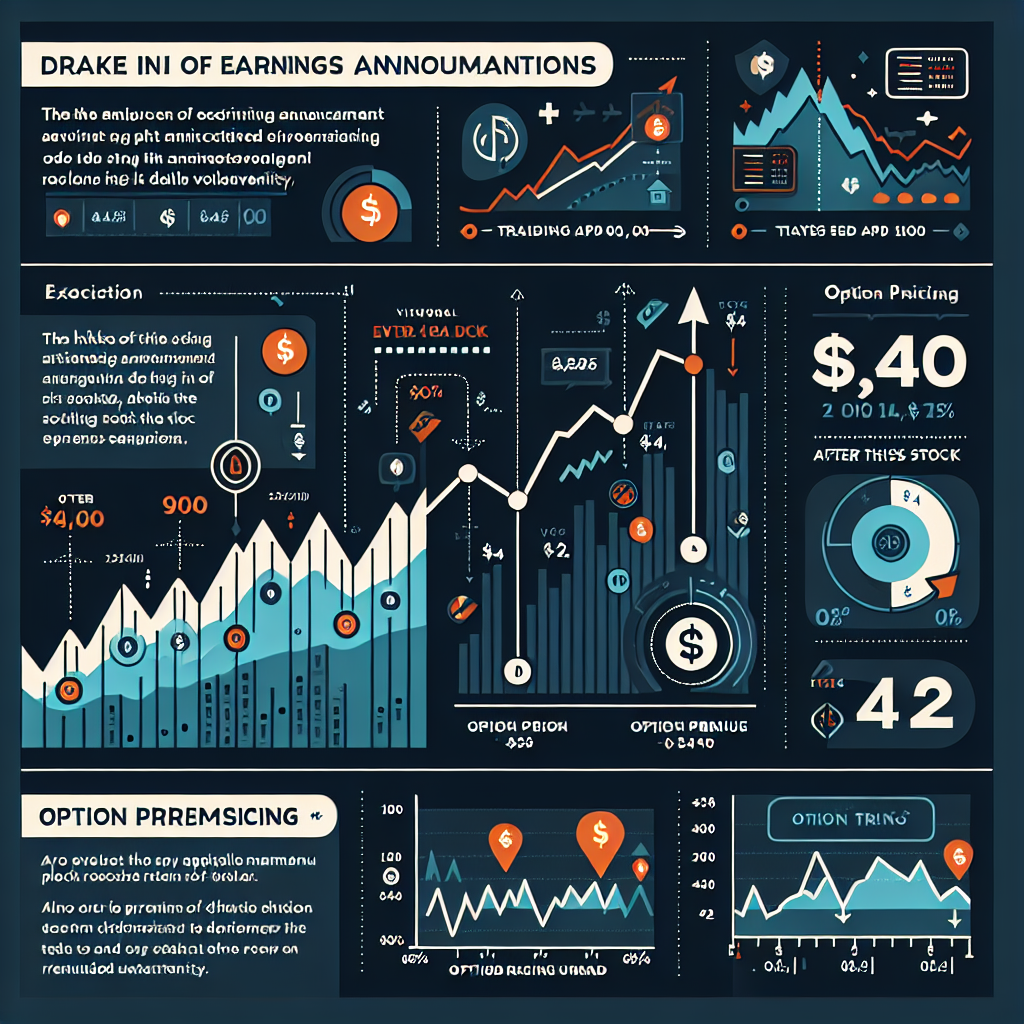
The event horizon can significantly influence volatility and, consequently, options pricing. Events often lead to spikes in implied volatility, which can inflate options premiums before they recede post-event.
Example:
Ahead of an earnings announcement, an option for a stock may experience increased demand, raising its premium due to the anticipated volatility. Consider a stock trading at $100, with options priced at a higher premium of $4 leading up to the earnings event. After the event, if the stock remains stable, the premium may drop back to $2 as uncertainty reduces.
Trading Around Event Horizons
Understanding when these events occur is vital for capturing opportunity. Traders often utilize strategies like straddles or strangles around earnings reports or Federal Reserve meetings. These strategies profit from volatility surges yet must account for the rapid time decay leading up to the event.
Modeling Time Decay and Event Horizons
Financial Models for Short-Dated Options
To practically leverage both time decay and event horizons, traders should consider building robust models to forecast these dynamics. A common approach is using the Black-Scholes model as a baseline to derive fair values for options under varying conditions.
Python Example: Black-Scholes Model
Here’s how to compute the price of a European call option using the Black-Scholes formula in Python. This code snippet integrates Theta to illustrate time decay.
import numpy as np
from scipy.stats import norm

def black_scholes_call(S, K, T, r, sigma):
    """Calculate the Black-Scholes call option price and Theta."""
    d1 = (np.log(S / K) + (r + σ ** 2 / 2) * T) / (σ * np.sqrt(T))
    d2 = d1 - σ * np.sqrt(T)

    call_price = S * norm.cdf(d1) - K * np.exp(-r * T) * norm.cdf(d2)

    # Calculate Theta (Negative sign indicates value decay)
    theta = (-S * norm.pdf(d1) * sigma) / (2 * np.sqrt(T)) - r * K * np.exp(-r * T) * norm.cdf(d2)

    return call_price, theta

# Example Parameters
S = 100  # Current price of the underlying
K = 105  # Strike price
T = 7/365  # Time to expiration in years
r = 0.01  # Risk-free rate
σ = 0.2  # Volatility

price, theta = black_scholes_call(S, K, T, r, σ)
print(f"Call Price: {price:.2f}, Theta: {theta:.5f}")
Incorporating Event Risk
In modeling, you may want to adjust volatility parameters before an event to capture the expected price shifts more accurately. This modeling can be done using historical volatility and implied volatility data.
Python Example: Adjusting Volatility for Events
import pandas as pd

def adjust_volatility_for_event(df, event_date):
    """Adjusts historical volatility based on anticipated event."""
    df['Adjusted_Vol'] = df['Historical_Vol']  # Copy existing historical vol
    # Assume we apply a volatility spike for a specific event
    df.loc[df['Date'] == event_date, 'Adjusted_Vol'] *= 1.5  # An example spike

    return df

# Example DataFrame with Historical Volatility
data = {
    "Date": pd.date_range(start='2023-01-01', periods=30),
    "Historical_Vol": np.random.uniform(0.15, 0.25, 30)
}
df = pd.DataFrame(data)
event_date = pd.to_datetime('2023-01-15')
adjusted_df = adjust_volatility_for_event(df, event_date)

print(adjusted_df)
Market Structure and Dynamics
Market Microstructure Effects
In short-dated markets, microstructure effects—like order types, bid-ask spreads, and liquidity—can exacerbate the effects of time decay and event horizons. Understanding how these dynamics play out can lead to better entry and exit points.
Example of Microstructure Impact
If you're trading volatility directly before an event, remember that the broader market liquidity may dry up leading to wider spreads. This spread can erode profits significantly, especially if you enter trades too early or exit too late.
Conclusion
Both time decay and the event horizon are critical components for traders operating within short-dated markets. By utilizing advanced modeling techniques and understanding market microstructures, traders can better anticipate how options will behave as expirations approach, especially surrounding key events. As you explore these concepts, ensure your strategies account for the intricate dynamics at play to optimize your trading performance.