prediction-markets
Why Prediction Markets Beat Polls: Information Aggregation in Practice
- prediction-markets
- kalshi
- trading

Why Prediction Markets Beat Polls: Information Aggregation in Practice

Prediction markets have emerged as powerful tools for forecasting future events, particularly in domains like politics, sports, and finance. Unlike traditional opinion polls, these markets continuously aggregate information from numerous participants, leading to more accurate predictions. This article delves into the mechanics of prediction markets, how they outperform polls, and the implications for quantitative traders and data scientists.
Understanding Prediction Markets
Prediction markets are exchange platforms where participants trade contracts based on the outcomes of future events. The price of a contract reflects the collective belief in the likelihood of a specific event occurring. For example, if a contract for a candidate winning an election trades at $0.70, the market infers a 70% chance of that outcome.
From a quantitative perspective, prediction markets leverage the wisdom of the crowd, aggregating diverse information sources. Participants include seasoned analysts, casual observers, and everyone in-between, making their predictions a richer dataset than single-point surveys.
How Polls Work
Traditional polling involves asking a representative sample of the population for their opinions or choices about an event. Polls typically provide snapshots of public sentiment but may suffer from various biases:
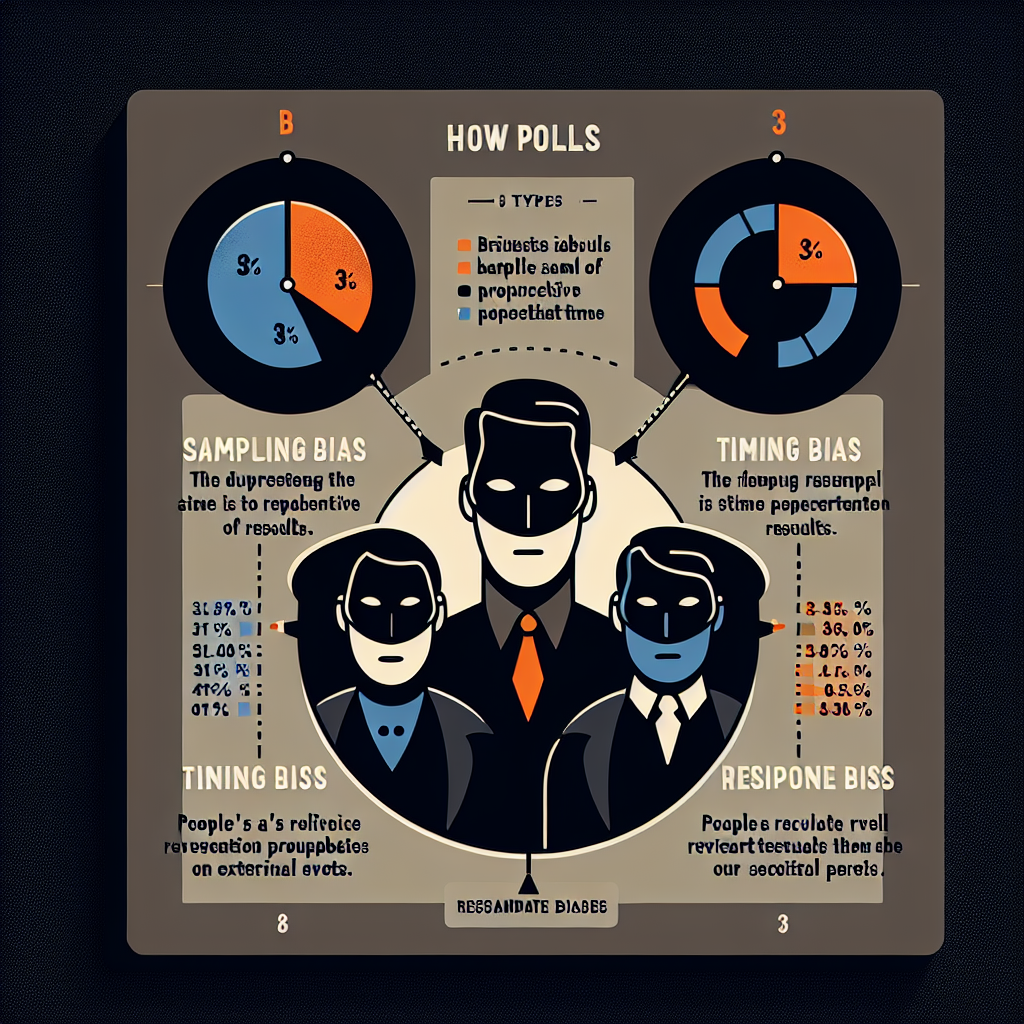
- Sampling Bias: If the sample is not representative of the population, results can skew.
- Timing Bias: Poll results can change over time, influenced by external events.
- Response Bias: People may not reveal their true opinions for various reasons, including social desirability.
Why Prediction Markets Provide Better Forecasts
1. Continuous Information Flow
Unlike polls that capture opinions at a single point in time, prediction markets operate continuously. This allows them to adapt quickly to changing circumstances, such as a major event or news affecting the election landscape.
For example, suppose a candidate is involved in a scandal. In a polling environment, that revelation could take time to filter down to interviewees, while prediction markets would immediately react, swiftly adjusting contract prices to reflect new perceptions.
2. Incentive Structures
Prediction market participants are financially motivated to accurately forecast outcomes. Traders stand to gain or lose money based on the accuracy of their predictions. This financial stake incentivizes individuals to perform due diligence, analyze current events, and aggregate information effectively.
Traders often use various techniques to gauge sentiment and forecast events, such as sentiment analysis on social media or statistical modeling through machine learning in Python.
import pandas as pd
import numpy as np
from sklearn.linear_model import LinearRegression

# Sample code to analyze prediction market data
data = pd.read_csv('prediction_market_data.csv')
X = np.array(data[['event_sentiment_score', 'historical_winning_percentage']])
y = np.array(data['market_price'])

model = LinearRegression()
model.fit(X, y)
predicted_prices = model.predict(X)
By analyzing both sentiment and historical data, traders can better predict market movements, leading to more accurate price reflections.
3. Diverse Inputs
Pooling diverse opinions often leads to more reliable predictions. In prediction markets, participants come from various backgrounds with their unique insights and information. This aggregation enables the market to factor in a broader spectrum of knowledge, leading to probabilistic outcomes that are closer to reality.
In a poll, a limited number of viewpoints can lead to narrower forecasts. In contrast, prediction markets allow for continuous updates from countless contributors, each supplying their insights.
Case Study: 2020 U.S. Presidential Election
During the 2020 U.S. presidential election, several prediction markets were active, including PredictIt and the Iowa Electronic Markets (IEM). These markets offered a real-time glimpse into the public sentiment surrounding the candidates.
In contrast, many polls suggested a tight race. As election night approached, prediction markets revealed a significant shift favoring Joe Biden, reflecting real-time assessments of voting patterns and early results from key states. Prediction markets adjusted prices swiftly and accurately compared to traditional polls, which often lagged behind incorporating on-the-ground changes.
Market Structure of Prediction Markets
Participants in Prediction Markets
- Traders: Individuals betting on the outcome.
- Liquidity Providers: Entities who hold positions long-term to ensure that buyers and sellers can transact without significant price distortion.
- Regulators: Entities ensuring market integrity and preventing manipulation.
Understanding this structure is vital for quant traders who may wish to build or analyze prediction markets. The flow of information and incentives therein present unique opportunities for algorithmic trading.
Statistical Properties and Market Dynamics
In parallel to how financial markets work, prediction markets often exhibit statistical patterns, including the efficient market hypothesis. Quant traders can employ techniques like logistic regression, Bayesian models, or even reinforcement learning algorithms to exploit inefficiencies in these markets.
For example, if a trader identifies an underpriced contract based on sentiment analysis from Twitter data, they might consider taking a position before the price adjusts.
Modeling Approach for Prediction Markets
To build robust models for predicting outcomes in these markets, data scientists can apply a rigorous data workflow:
- Data Collection: Scrape data from prediction markets and relevant news sources.
- Preprocessing: Clean and standardize the data for analysis.
- Feature Engineering: Create features like sentiment scores, volatility measures, and historical trends.
- Model Development: Use regression or classification models to predict outcomes.
# Data preprocessing example in Python
import pandas as pd
from sklearn.model_selection import train_test_split
from sklearn.preprocessing import StandardScaler

data = pd.read_csv('prediction_market_data.csv')
X = data[['sentiment_score', 'historical_data']]
y = data['market_outcome']

X_train, X_test, y_train, y_test = train_test_split(X, y, test_size=0.2, random_state=42)

scaler = StandardScaler()
X_train = scaler.fit_transform(X_train)
X_test = scaler.transform(X_test)
Real-World Applications
Apart from political outcomes, prediction markets can be applied in various domains:
- Corporate Decisions: Companies can utilize internal prediction markets to gauge employee sentiment regarding product launches.
- Public Health: They can forecast the likelihood of disease outbreaks based on emerging data and countermeasures.
- Sports: Betting markets aggregate fan sentiment and expert analysis, often proving more accurate than polls on team performance.
Conclusion
Prediction markets represent a paradigm shift in how we aggregate information and make predictions. Their superior accuracy compared to traditional polls can be attributed to continuous information flow, strong incentive structures, and diverse inputs. For quant traders and data scientists, understanding and leveraging these markets can unlock valuable insights, guiding investment decisions and forecasting models. As interest in behavioral finance and data-driven prediction strategies grows, predicting outcomes through these markets will likely become an essential toolkit for professionals across various fields.
By combining domain expertise with quant techniques, builders can utilize prediction markets not just for betting on events but as a means of deepening their understanding of collective human decision-making dynamics. The future of forecasting is not just in polling; it's in the market's collective mindset.